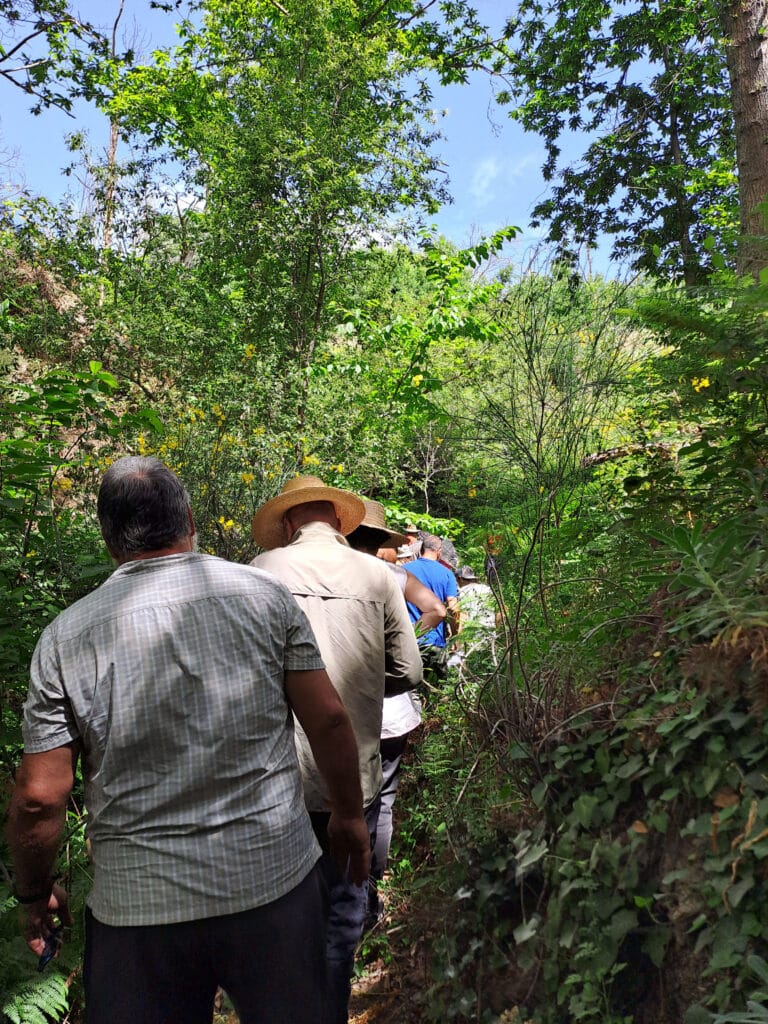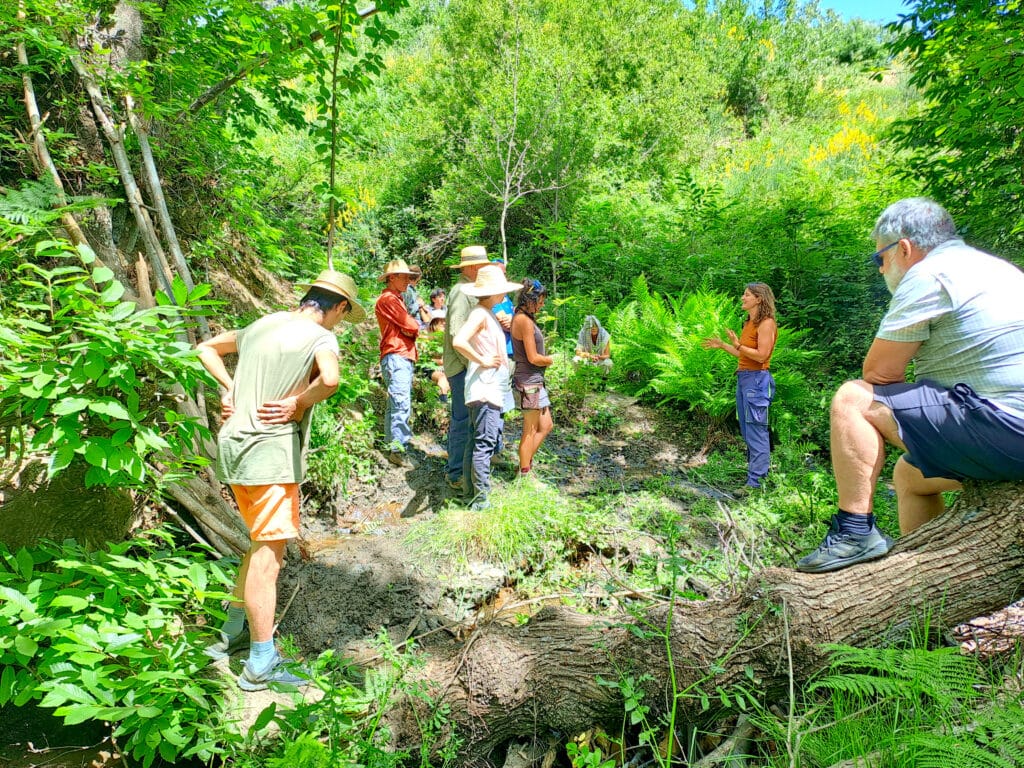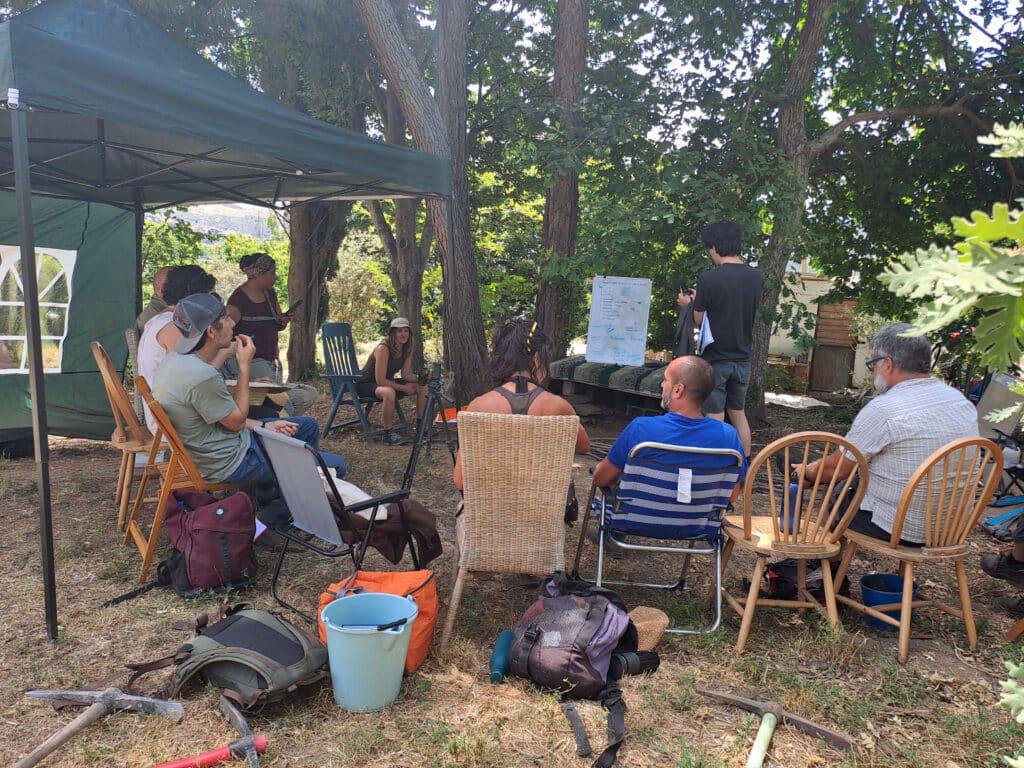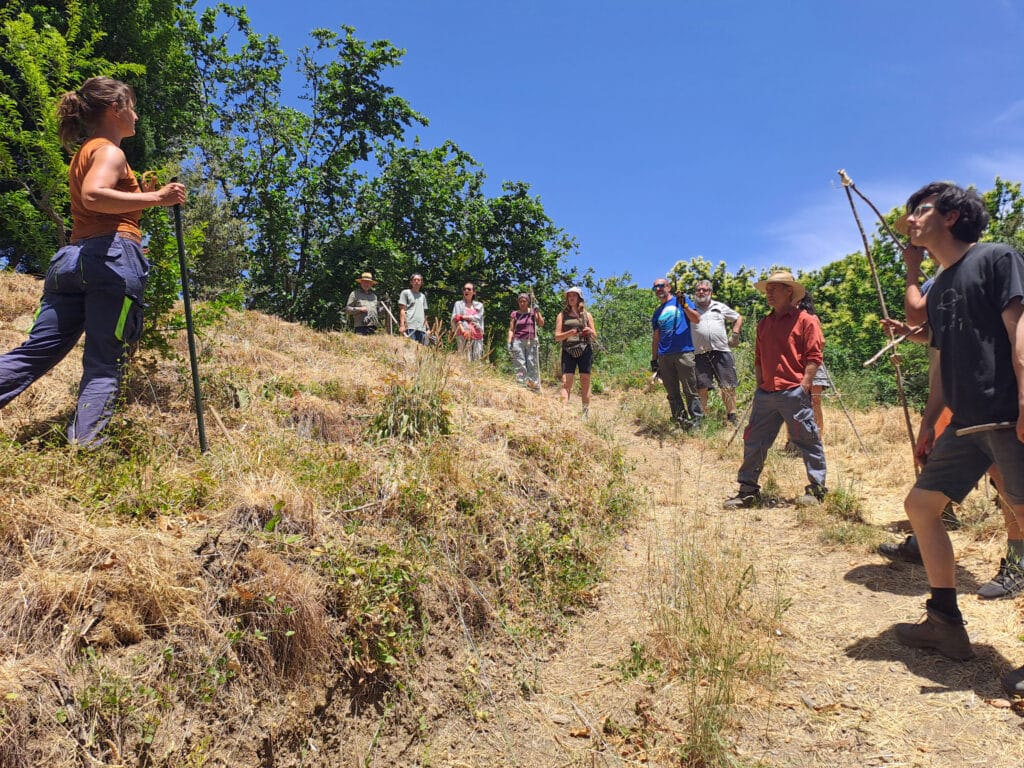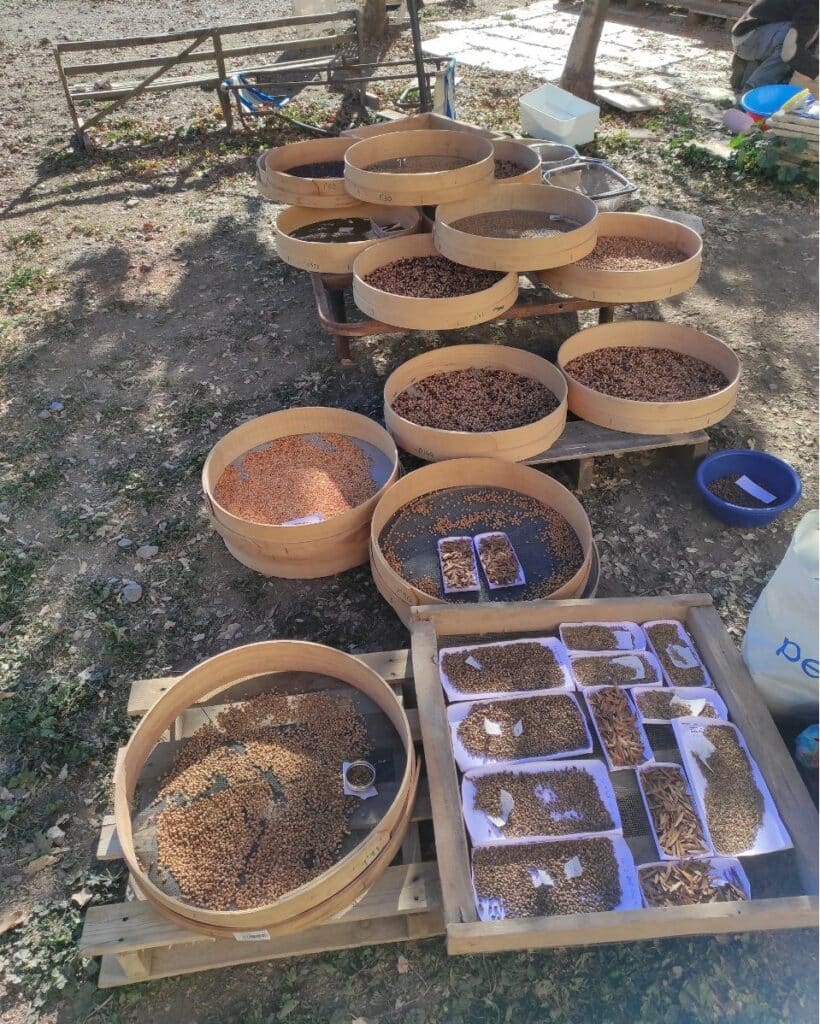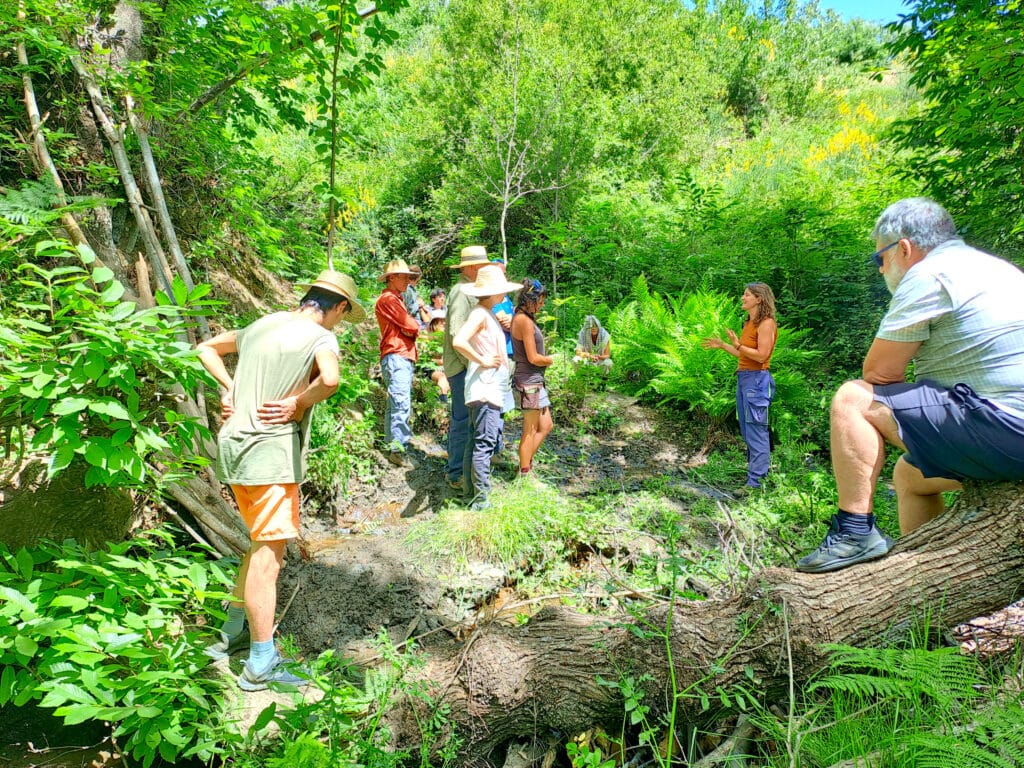
A few days ago, we took part in one of those workshops that remind us why we love getting together to learn from one another so much. We filled all the available places and shared a day full of conversation, knowledge-sharing and reflection on how we can better care for the landscapes we inhabit.
The morning began with a journey through the history of the Sierra Nevada and the Alpujarra. We discussed the traces left by different cultures over the centuries: from the Romans to the Al-Andalus period, including the traditional acequias and other forms of water management that have made it possible to live in these mountains for generations.
The best part was that the event didn’t turn into a mere lecture. Each participant contributed their own experiences, knowledge and questions. At times, the conversation took the form of an impromptu round-table discussion, where different perspectives enriched the debate and helped us to better understand the territory we share.
We then turned our attention to a fundamental issue for the future of our mountains: how to retain rainwater and make better use of it where it falls. We explored different strategies used in ecological restoration and permaculture, such as infiltration ditches, deep beds, small ponds and systems designed to promote water infiltration and storage in the soil.
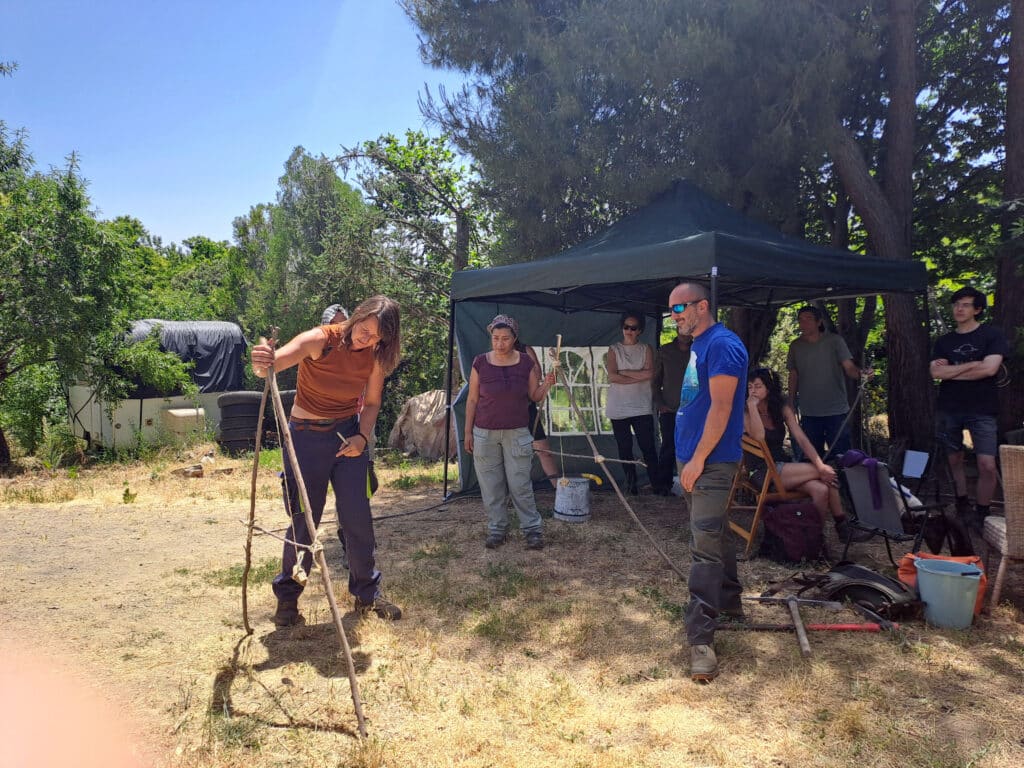
We also spent time looking at practical examples and building a very simple tool known as an A-frame or contour level. Using this, we learnt to identify contour lines and to design small-scale interventions to help reduce runoff and improve water infiltration. One of the ideas we kept coming back to throughout the day was the importance of starting with small-scale actions, tailored to the resources available and the knowledge we are gradually acquiring.
The availability of local materials was also a key theme. We made use of nearby resources, such as sacks of sheep’s wool from the shearing season, reflecting on how to reuse materials that already exist in our surroundings to put them to work for regeneration.
Another topic that sparked a great deal of interest was greywater management. We shared examples from different places where constructed wetlands and biofilters are used to return higher-quality water to the environment, sparking an interesting debate on how these solutions could be adapted to our villages and communities.
As is often the case at such gatherings, the day drew to a close over a shared meal. We continued chatting, exchanging ideas and strengthening bonds between people who had travelled from different corners of the Alpujarra. Some were born here, others had come from elsewhere, but all shared a common interest in learning how to live more harmoniously with nature.
We went home with new tools, new questions and a keen desire to continue exploring ways to regenerate our landscapes. Because caring for water also means caring for the forests, the soil and the communities that depend on them.