On June 13, we held a workshop focused on water management, permaculture, and water conservation strategies, and we came away with much more than just new tools: we came away with a day of exchange, conversation, and collective learning.
There were 15 of us, and we began by exploring the history of the Sierra Nevada. We discussed the legacies of the Romans and Arabs, the Nasrid era, and—in particular—the irrigation channels and the various ways in which communities have learned to interact with water and the land.
It served as a starting point for sharing knowledge. Although we started with some guidelines and content, the workshop soon turned into an open conversation in which each person contributed their experiences, knowledge, and different ways of understanding the land. There were moments of genuine roundtable discussion, with questions, debates, and different points of view that greatly enriched the day.
Then we moved from conversation to practice. We asked ourselves how we could retain rainwater on our land and make the most of every drop. We explored different strategies: infiltration ditches, deep beds, ponds, and other techniques related to permaculture.
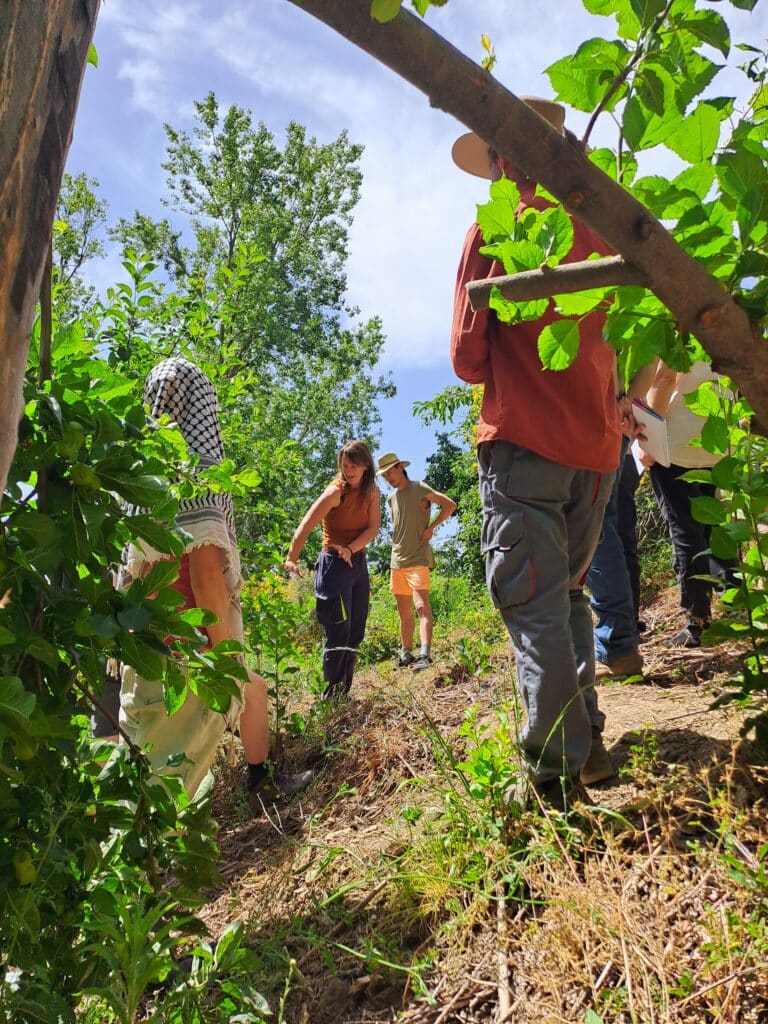
We also went out into the field to observe some of these solutions in practice and learned how to build and use a very simple tool: the A-frame. With it, we were able to mark contour lines and identify locations for small infiltration ditches. Once again, we saw that we don’t always need large-scale infrastructure: we can start small, using the resources at our disposal and adapting to the characteristics of each location.
In that vein, we also made use of a resource that’s readily available right here at this time of year: sheep’s wool. Having it on hand allowed us to reflect on how we can better utilize the materials and resources that already exist in our communities.
The workshop also led us to discuss graywater, biofilters, and constructed wetlands, with examples from different places and experiences that demonstrate other ways to manage and regenerate the water we use. Together, we considered how some of these solutions could be adapted to places like La Taha, Pórtugos, and other areas where we live.
And, as was to be expected, we ended the day by sharing a meal and continuing our conversations. We were people from different corners of the Alpujarra—some locals and others who had come from elsewhere—but all with something to contribute and something to learn.
For us, that was one of the day’s greatest lessons: knowledge is also a resource that we can cultivate collectively.
At Semillistas, we continue to explore simple, tailored ways to care for our territories, improve water management, and strengthen our relationship with the ecosystems we inhabit.
It was a beautiful, practical day full of shared learning. And, above all, a reminder that when we pool our knowledge, we can also find new ways to care for the place we share.